Portrait Photography: What It Is and Why It Matters
Every photograph tells a story, but few capture the human experience as powerfully as a well-crafted portrait. Portrait photography is more than simply pointing a camera at a person and pressing the shutter; it is a deliberate, technical, and deeply artistic discipline that demands both skill and intention from the photographer.
Whether you are refining your lighting techniques, studying compositional frameworks, or learning how to build genuine connection with your subjects, understanding the fundamentals of portrait photography at a deeper level will transform the quality of your work. This is not a beginner's overview. This is an analytical look at what separates competent portraits from compelling ones.
In this post, we will examine the core principles that define strong portrait work, explore why this genre holds such significance in both commercial and fine art photography, and break down the technical and creative decisions that experienced photographers make on every shoot. By the end, you will have a sharper understanding of what portrait photography truly demands, and how to elevate your own practice with greater confidence and precision.
What Portrait Photography Actually Is
Portrait photography has its roots in fine art and personal memory, not professional positioning. When Louis Daguerre's invention democratised portraiture in the 1830s, it moved the painted likeness from aristocratic walls into everyday hands. By the time of the American Civil War, people were commissioning portraits of soldiers before deployment, not to build a personal brand, but because they feared they might never see their loved ones again. That emotional impulse, the desire to be seen, remembered, and known, has shaped the genre ever since.
At its core, a good portrait communicates something true about a person: their presence, character, or emotional state at a specific moment in time. The distinction between a great portrait and a functional photograph lies in intentionality. Composition, lighting, and direction all serve a single purpose: revealing something genuine. Richard Avedon placed fashion muses alongside war survivors in the same body of work, demonstrating that portraiture carries meaning far beyond context or setting. The value of being seen, really seen, runs through the entire history of the genre.
Modern portrait photography spans a genuinely wide spectrum of types and applications, from fine art and editorial work through to family sessions, newborn photography, weddings, and lifestyle imagery. These categories overlap constantly, and most photographers work across several rather than specialising exclusively in one.
Understanding this breadth matters if you are a professional considering photography for business purposes. Portrait photography was designed to capture a person truthfully. It was not designed to position them strategically or close a credibility gap between their expertise and how they appear online. That requires something more purposeful than a well-composed moment.
Cambridge's portrait photography market reflects this consumer-first orientation clearly. The majority of local photographers serve families, couples, and lifestyle clients. Professional headshots are increasingly offered as a standard add-on service, but strategic visual identity work, the kind that addresses how a founder or consultant is understood by the right people, remains largely absent from the local market.
The Three Categories Most Professionals Conflate
Understanding the difference between a headshot, a portrait, and a brand image is not a matter of preference or style. It is a functional distinction, and getting it wrong is one of the most expensive mistakes a senior professional can make when investing in photography.
A headshot is a functional image. Face forward, clean or simple background, clear and consistent lighting. Its sole purpose is identification: it answers the question "who is this person?" quickly and professionally across platforms like LinkedIn, speaker directories, or company websites. A strong headshot builds baseline recognition. It does not, however, build trust, communicate authority, or position you within a specific professional context. It is a credential, not a conversation.
A portrait is an expressive image. It captures presence, personality, and emotional depth. Great portrait photography, as explored in the previous section, has its lineage in fine art and personal memory. It can be visually compelling and technically brilliant while remaining entirely unsuited to professional positioning. A portrait tells you something about who someone is as a human being; it does not necessarily tell you why they matter to you professionally, or why you should hire, trust, or follow them.
A brand image is a strategic asset. It answers a fundamentally different question: "why does this person matter to me?" Every element of a brand image, including environment, body language, expression, light, and composition, is working in service of a specific professional narrative. It communicates what you stand for, who you serve, and what it feels like to work with you. It closes the gap between your real expertise and how you are seen by the people who need to trust you.
The problem is that most professionals, when they search for portrait photography, are actually searching for brand images. They arrive with professional goals but book a consumer portrait session or a standard headshot package that was never designed to meet those goals. This misalignment is partly a client-side knowledge gap, but it is also a structural industry problem: as the photography profession itself grapples with questions of strategic purpose versus technical capture, photographers often lack the vocabulary to guide clients toward the session type that would actually serve them.
The cost of conflation is real. Senior professionals who book the wrong session type walk away with images that look polished but perform poorly, generating no meaningful shift in how they are recognised or trusted by the right audiences. For founders, consultants, and independent professionals whose entire business rests on personal credibility, that is not a minor inconvenience. It is a missed opportunity with a measurable professional price.
The Credibility Gap: Why Substance and Visibility Fall Out of Sync
There is a particular kind of professional frustration that rarely gets named directly. You have spent years building something real: deep expertise, a trusted reputation, a body of work that speaks for itself. And yet the version of you that exists online, the headshot from a conference in 2018, the awkward LinkedIn photo taken on a phone, still belongs to an earlier chapter. The gap between who you have become and how you appear to the world is not a vanity problem. It is a strategic one.
Research makes the stakes clear. People form trust judgements within 100 milliseconds of seeing a face, and 55% of all first impressions are shaped by visual elements before a single word is read. Your profile image is not supplementary to your professional case; it is the first argument you make. An outdated or misaligned photograph does not simply fail to impress. It actively signals that your current level of authority, seriousness, and relevance may not match what your work actually demonstrates.
As one practitioner puts it plainly, the quality of your professional photography is not a cosmetic choice; it is a credibility decision. When the signals are out of sync, people feel the friction even if they cannot articulate it. A bio that communicates settled expertise alongside a photograph that projects hesitancy or belongs to a different professional era creates a subconscious mismatch. The right clients, collaborators, and opportunities move on, often without understanding quite why.
This pattern is particularly visible in Cambridge's knowledge economy. The city's ecosystem of tech founders, biotech researchers, academic spinout leaders, independent consultants, and creative practitioners is dense with highly capable people who have evolved considerably since their last professional image was taken. The credibility gap is not about looking impressive. It is about closing the distance between what you have built and how you are understood by the people who matter most to your next stage of growth. Being seen accurately is the foundation of being trusted appropriately.
The Value of Being Seen: Why Visibility Is a Professional Asset
Being seen accurately and strategically is one of the most underleveraged assets available to independent professionals and founders. The data behind this claim is not ambiguous. According to LinkedIn photo research compiled by Capturely, profiles with professional photos receive 14 times more profile views, 9 times more connection requests, and 36 times more inbound messages than those without. Yet personal branding specialists consistently report that the profile photograph remains the single element most neglected, even among C-suite professionals who have invested heavily in every other aspect of their positioning. The gap between what visibility can do and what most professionals allow it to do is, in practical terms, a commercial gap.
The psychology behind this is well-established. Princeton researchers Willis and Todorov demonstrated that reliable assessments of trustworthiness, competence, and likability form within 100 milliseconds of seeing a face. Longer viewing time did not change the judgment; it only increased confidence in it. For founders, coaches, consultants, and actors, this means the photograph is not a supporting element. It is the first professional encounter a prospective client, collaborator, or media contact has with them, and it has already done its work before a single word is read. The influence of profile pictures on professional branding is not a soft, unmeasurable quality; it is the opening move in every professional relationship.
What is less commonly understood is the cumulative effect of visual alignment. When a professional's image accurately reflects their positioning and identity across platforms, they are not starting from zero in each new conversation. The groundwork is already laid. Credibility is pre-loaded. The friction of having to establish authority, expertise, and trustworthiness from scratch is substantially reduced. Inconsistency across channels, by contrast, signals carelessness rather than seniority, regardless of the depth of experience behind it.
This is the foundation of the Seen, Understood, Known framework developed by Rajen Mistry. Being seen accurately is not the destination; it is the starting point. Recognition and trust do not appear at the moment of a strong photograph. They compound over time, built on a visual foundation that is coherent, intentional, and aligned with who someone has actually become professionally. Visibility, handled strategically, does not just attract attention. It shapes the quality and relevance of the attention it earns.
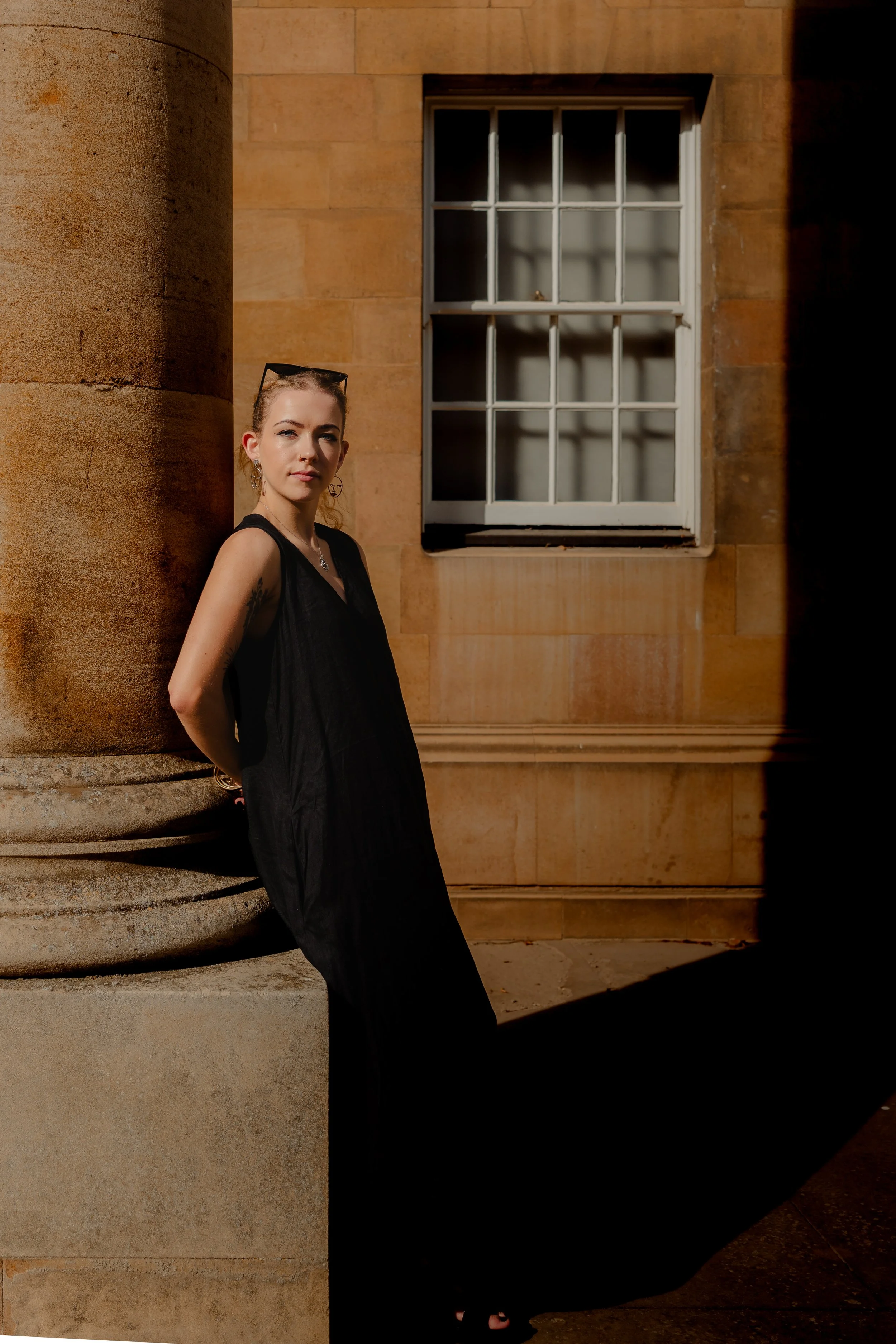
Why Creative Direction Changes Everything
The way you tell your story online can make all the difference.
Technical competence is the price of entry, not the point of difference. Correct exposure, flattering light, clean composition: these are the minimum standards any professional photographer should meet. They are craft foundations, not strategic outcomes. When a senior professional invests in portrait photography, they are not paying for technical accuracy. They are paying for what the image communicates once it leaves the session and starts working on their behalf.
Creative direction is what determines whether an image actually does that work. As photographer Anthony Romano articulates, creative direction is "the thinking that happens before anyone picks up a camera." It means understanding who a person is, what they need to communicate, and then shaping every element of the image, location, light, posture, expression, context, to carry that meaning with precision. Without it, Romano observes, "most people hire a photographer and hope for the best. They show up, the photographer points a camera, and somewhere in the gallery there are a few shots that work." That is not a strategy. It is luck.
The distinction this creates is significant. Without creative direction, a portrait session produces an image of a person. With it, the session produces an image that communicates a position. These are not the same thing. One documents presence; the other establishes authority, signals trustworthiness, and tells the right audience exactly why this person is worth their attention.
For founders, consultants, and independent professionals, the strategic stakes of visual communication are material. The question is never simply "does this look like me?" It is a harder, more valuable question: does this image show the right people who I am and why I am worth their time? That question requires strategic input, not just a camera.
Most portrait photographers in the professional market are not equipped to answer it. Their positioning centres on client comfort, accessibility, and technical delivery, which serves consumer portrait clients well. But senior professionals with strategic communication needs require something different: a practitioner who brings creative and strategic direction to the brief, not just technical skill to the shoot. That gap, between what most portrait photography delivers and what an experienced founder or consultant actually needs, is where the real value lives.
What Portrait Photography Can and Cannot Do for a Senior Professional
Portrait photography, executed well, does something genuinely valuable: it captures presence. A well-composed, well-lit portrait communicates warmth, confidence, and approachability in ways that a poorly taken snapshot simply cannot. Research on first impression formation consistently shows that assessments of competence and trustworthiness are made within milliseconds of seeing a face, which means a strong portrait creates real advantage for any professional operating with an online or public-facing profile. These are not trivial gains.
The limitation of standard portrait photography is equally real, and it is worth naming precisely. A consumer portrait session is designed to produce a pleasing likeness, not a strategic communication. It cannot, on its own, signal where you sit in your field, speak to a specific professional audience, or convey the depth of what you have built over a career. Two professionals photographed in identical sessions can emerge with images that are technically indistinguishable but strategically meaningless, because no one asked what either of them needed to communicate before a single frame was captured.
This is where the distinction between portrait photography and strategic brand photography becomes consequential. The gap is not about resolution or lighting ratios. It is about intent and process. Strategic brand photography begins before the camera is ever raised: with a consultative conversation about positioning, about audience, about the narrative that needs to travel through the image. That requires someone who thinks like a creative director, not only a technician.
A useful test for any senior professional evaluating a photography investment is this: what do you need someone to understand about you within three seconds of seeing this image? If the answer involves authority, expertise, or a defined audience, a consumer portrait session is unlikely to deliver it. The right investment treats the image as a communication tool, built with the same rigour you would apply to any other element of how your professional reputation is conveyed.
Portrait Photography for Founders, Consultants, and Professionals in Cambridge
Cambridge occupies an unusual position in the UK's professional landscape. The city and its surrounding ecosystem support one of the highest concentrations of founders, academic entrepreneurs, biotech leaders, and independent consultants anywhere outside London. These are professionals for whom reputation is not incidental; it is the product. The Cambridge cluster, anchored by the university, Science Park, and a dense network of spinouts, incubators, and advisory firms, generates a professional tier that operates at genuine international weight. Visual presence for a biotech founder presenting to institutional investors, or a consultant whose entire pipeline runs through LinkedIn referrals, carries a different burden than a lifestyle shoot for a small business owner.
The gap in the local market is striking. The Cambridge portrait photography landscape is oriented almost entirely toward consumer and lifestyle clients: families, weddings, and small lifestyle businesses. Providers serving this segment do solid, appropriate work for their audience. But that audience is not a founder preparing for a keynote, a coach relaunching their practice, or a Cambridge Angels MD who needs images that communicate decades of earned authority. For professionals at this level, the absence of strategic photographic direction is not a neutral condition. It is a credibility gap that works against them every time someone checks their profile before a meeting.
This is the context in which Rajen Mistry's work sits. Based in Cambridge and drawing on 22 years of creative agency experience, Rajen works specifically with professionals who are the brand: founders, consultants, coaches, and senior independents whose visual presence needs to match the substance of what they have built. The approach is not technical photography with a strategy label attached. It is creative direction applied to personal brand, closing the gap between who someone is and how they are seen online.
The FounderStory offer takes this further for founders and consultants specifically, using story-driven photography structured around three outcomes: being Seen, Understood, and Known. Research confirms that trust decisions are made within roughly 100 milliseconds of seeing someone, which means the image itself is doing significant strategic work before a single word is read. For Cambridge professionals operating at a high level, that is not a detail. It is the first impression that determines whether the conversation happens at all.
How You Are Seen Shapes How You Are Understood
Portrait photography, at its best, is not about capturing what you look like. It is about communicating who you are, what you stand for, and why any of that should matter to the people you most need to reach. That distinction sounds subtle until you consider the stakes. For founders, senior consultants, and independent practitioners, a single profile image is often the first professional judgment someone makes about you, and research consistently shows those judgments form within milliseconds and prove remarkably resistant to revision.
The difference between a headshot, a portrait, and a strategic brand image is not a matter of taste or budget. Each serves a different purpose, and conflating them produces imagery that satisfies without ever truly working.
If your current photography no longer reflects who you have become, that is not a cosmetic problem. It is a credibility gap: a visible disconnect between your actual level and how you are being read by the right people.
The actionable step here is deliberately simple. Look at your current profile imagery with genuine critical distance and ask one question: does this communicate the level, substance, and audience I am actually operating at? If the answer gives you pause, the problem is already diagnosed and the solution is considerably clearer than it might first appear.
Conclusion
Portrait photography is one of the most demanding and rewarding disciplines in the craft. Strong portraits emerge from the intersection of technical mastery, intentional composition, and genuine human connection. Lighting shapes mood and dimension; posing guides how subjects are perceived; and the relationship between photographer and subject determines whether a portrait feels alive or hollow.
These are not abstract concepts. They are practical skills you can develop, refine, and apply on every shoot you take.
Now it is time to put this knowledge into action. Study the portraits that move you, identify what makes them work, and then bring that awareness into your own practice. Whether you shoot commercially or creatively, the principles covered here will sharpen your eye and elevate your results.
The camera is already in your hands. The only thing left is to use it with greater intention.